ProcessJuly 8, 20266 min read
The Rise of Fermentation
For most of coffee's history, processing was a step to get through. In the last decade it became one of the loudest variables in the cup — and the most argued about.
What is actually fermenting
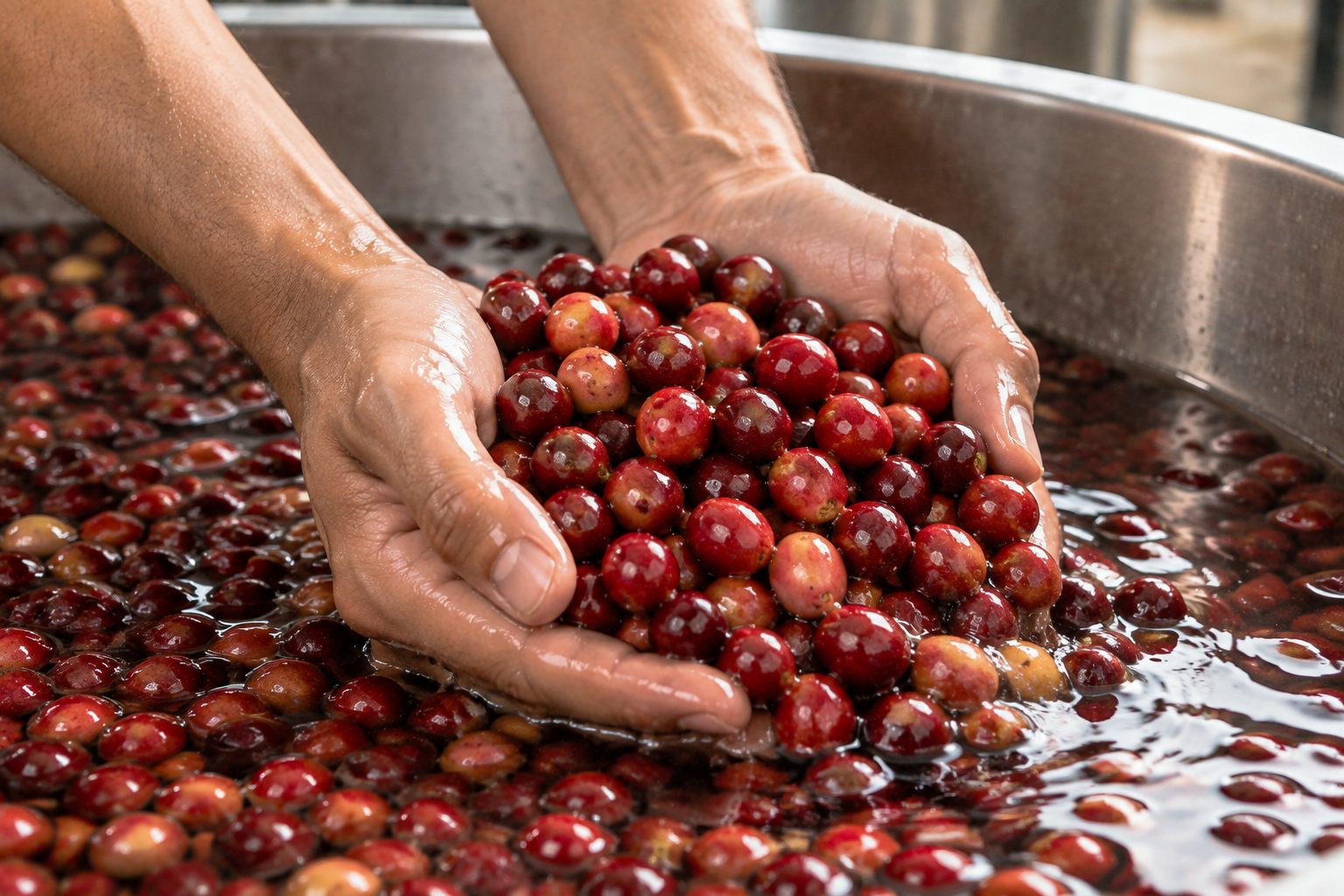
A coffee cherry is a fruit with two seeds inside. Between the skin and the seed sits mucilage: a sticky, sugar-rich layer. Once the cherry is picked, the yeasts and bacteria already on its surface begin breaking that layer down.
That is the fermentation. The seed itself is not fermenting — it is sitting inside a fruit that is, and it absorbs the compounds being produced around it. How long that goes on, at what temperature, and with how much oxygen, is what a processing method really controls.
The three you will see on a bag
Washed coffees have the mucilage removed early, usually after a short tank fermentation, then are rinsed and dried as bare seed. Less fruit contact means less fruit influence, which is why washed lots taste clean and transparent: you are tasting the seed and the place it grew.
Natural coffees are dried whole, cherry and all. Fermentation runs for weeks as the fruit dries around the seed, and the result is heavier, sweeter and openly fruity — strawberry, blueberry, rum. It is also the hardest to do well, because a whole drying cherry can spoil.
Honey processing sits between them: the skin comes off, some mucilage stays on for drying. A fuller mouthfeel and more sweetness than a washed coffee, more clarity than a natural.
Where anaerobic came from
The newer methods borrow from winemaking. Seal the cherries in a tank without oxygen and the microbial population shifts: different organisms survive, and they produce different acids and aromatic compounds.
Producers can now control temperature, time, oxygen and sometimes the starter culture. Push it and you get flavours that do not read as coffee at first — cinnamon, tropical fruit, fermented plum.
This is where the argument lives. A strongly fermented lot can be extraordinary. It can also bury the farm, the varietal and the altitude under a flavour the process supplied.
Tasting it deliberately
Buy a washed and a natural from the same country, ideally the same region, and brew them the same way on the same day. The difference you notice is almost entirely processing.
Then ask a narrower question of a heavily processed lot: can you still tell where it came from? When the answer is yes, the process has added something. When the answer is no, it has replaced something.
Why it matters to a farm
Processing is the one part of the chain a producer can change quickly. Altitude is fixed, varietal takes years to replant, weather is weather. A fermentation protocol can be adjusted in a season.
That is the real reason it spread. It gives producers a lever on quality — and on price — that does not require a decade and a new plot of land.